
Genealogy and Royal House Tradition · Kapuna Recognition
Royal Lineage as Recorded by the Polynesian Kingdom of Atooi
Traditional genealogy records sovereignty as inherited and carried through genealogy, ceremony, and the recognition of the Kapuna. Each link below is shown with the form of evidence that preserves it.
Two classes of record
Historical Hawaiian Kingdom Record
Material originating with the Hawaiian Kingdom as a historical state — its institutions, laws, treaties, decrees, and governmental activity.
Contemporary Atooi Record
Material of the modern Kingdom — its leadership, ceremonies, missions, agreements, correspondence, and Kingdom-issued instruments.
Historical Hawaiian Kingdom records document the institutions, laws, diplomacy, and governmental activity of the historical Kingdom. Their inclusion does not by itself establish the authority of any particular contemporary claimant. Contemporary claims of continuity, succession, genealogy, or authority are documented separately.
Section I · The Lineage Statement
Kingdom records identify Aliʻi Nui Aleka Aipoalani as a descendant of the royal line of King Kamehameha I and his first wife Pauahi, with genealogical ties to other royal lines throughout the Pacific. According to the submitted genealogy, his genealogical standing is carried through the Kapuna (elders) who preserved the original Hawaiian Kingdom flag through the 1893 overthrow and entrusted it to him as successor within the line they recognise. Within Polynesian custom this transfer of custodianship is a recognised mechanism of succession.
Section II · The Kapuna Flag
The Original. Not a Replica.
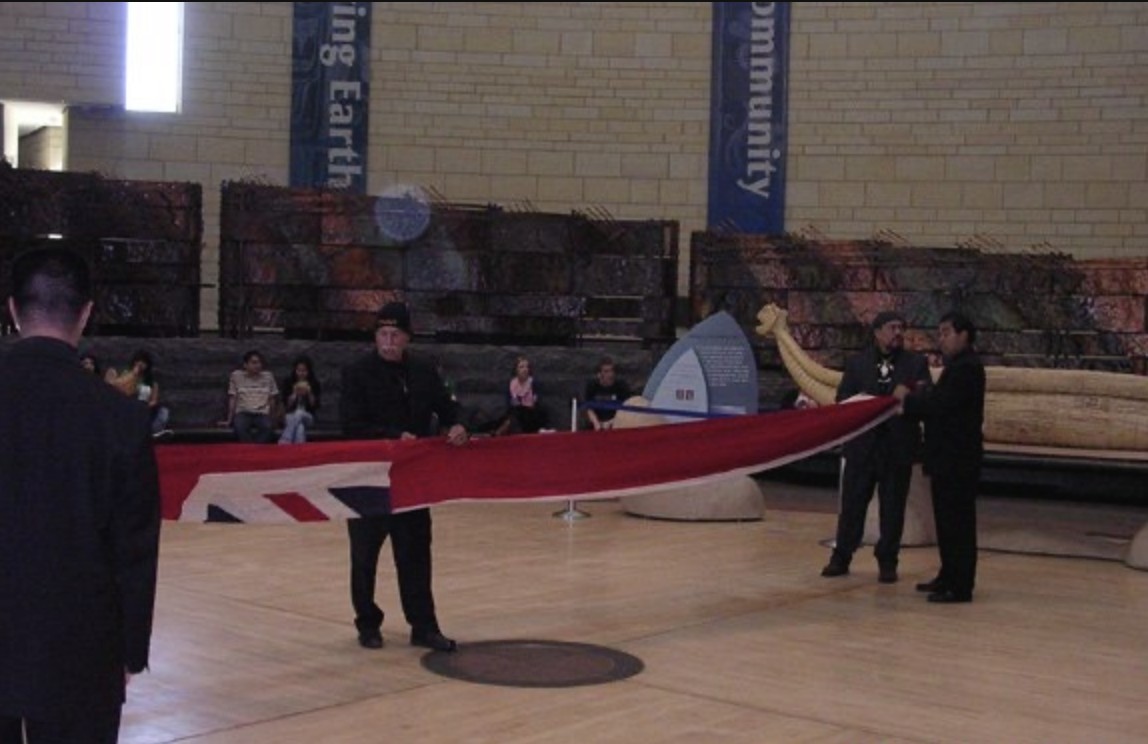
The original flag of the Hawaiian Kingdom was hidden by the Kapuna after the 1893 overthrow to prevent its destruction by the occupying government. It was preserved in secret for generations and, according to the Kingdom's record, passed to Aliʻi Nui Aleka Aipoalani as the successor recognised by those elders.
The Kingdom records the flag as the original rather than a replica, and treats its custody as the central traditional evidence of succession.
Section III · Visual Lineage Chart
The Royal Genealogical Record
The succession below is drawn from the Royal Genealogical Record of the Kingdom. The unnamed generations are links the Kingdom reports holding within its own records; their names and supporting documentation have not yet been published here, and they remain unresolved links in this archive.
Ancient Hawaiian Royal Line
Pre-1778The chiefly genealogies of the Hawaiian Islands, with ties to other royal lines across the Pacific.
King Kamehameha I & Pauahi
d. 1819Kamehameha I, unifier of the Hawaiian Islands, and his first wife Pauahi — the royal line from which Kingdom records trace the descent of the Aliʻi Nui.
Unresolved link — held in the Royal Genealogical Record, not yet published
Unresolved link — held in the Royal Genealogical Record, not yet published
Unresolved link — held in the Royal Genealogical Record, not yet published
The Kapuna Custodians
Elders who preserved the Hawaiian Kingdom flag through the 1893 overthrow and, according to the Kingdom's record, transmitted it to the successor they recognised.
Aliʻi Nui Aleka Aipoalani
CurrentRecognised by the Kapuna; carrier of the Kapuna Flag; reigning sovereign of the Polynesian Kingdom of Atooi under the Kingdom's own record.
Section IV · The Prophecy & The Mission
Recognition Extended by the People

Ancient Polynesian oral tradition carries the prophecy of a chief who will return to unite the Polynesian Triangle — the vast ocean territory connecting Hawaiʻi, Rapa Nui, and Aotearoa — through peace, not conquest.
Kingdom records identify leaders in Tahiti, Rapa Nui, and Aotearoa as having received and acknowledged Aliʻi Nui Aleka Aipoalani in this tradition.
The tradition holds that recognition was extended by the assembled chiefs, rather than proclaimed by the Kingdom itself.
Section V · Kapuna Recognition
The Original Law
The Kapuna — the elders who are the living memory of the Hawaiian people — do not grant recognition lightly. Their acknowledgement of Aliʻi Nui Aleka Aipoalani as sovereign is a customary and chiefly form of recognition, documented on its own terms and distinct from recognition by a modern state.
It predates the United States. It predates the Kingdom of Hawaii. It is the original law.

Photograph: Kapuna elders presenting the Hawaiian Kingdom flag
Photograph: Recognition ceremony at the heiau
Photograph: Kapuna council with the Aliʻi Nui